
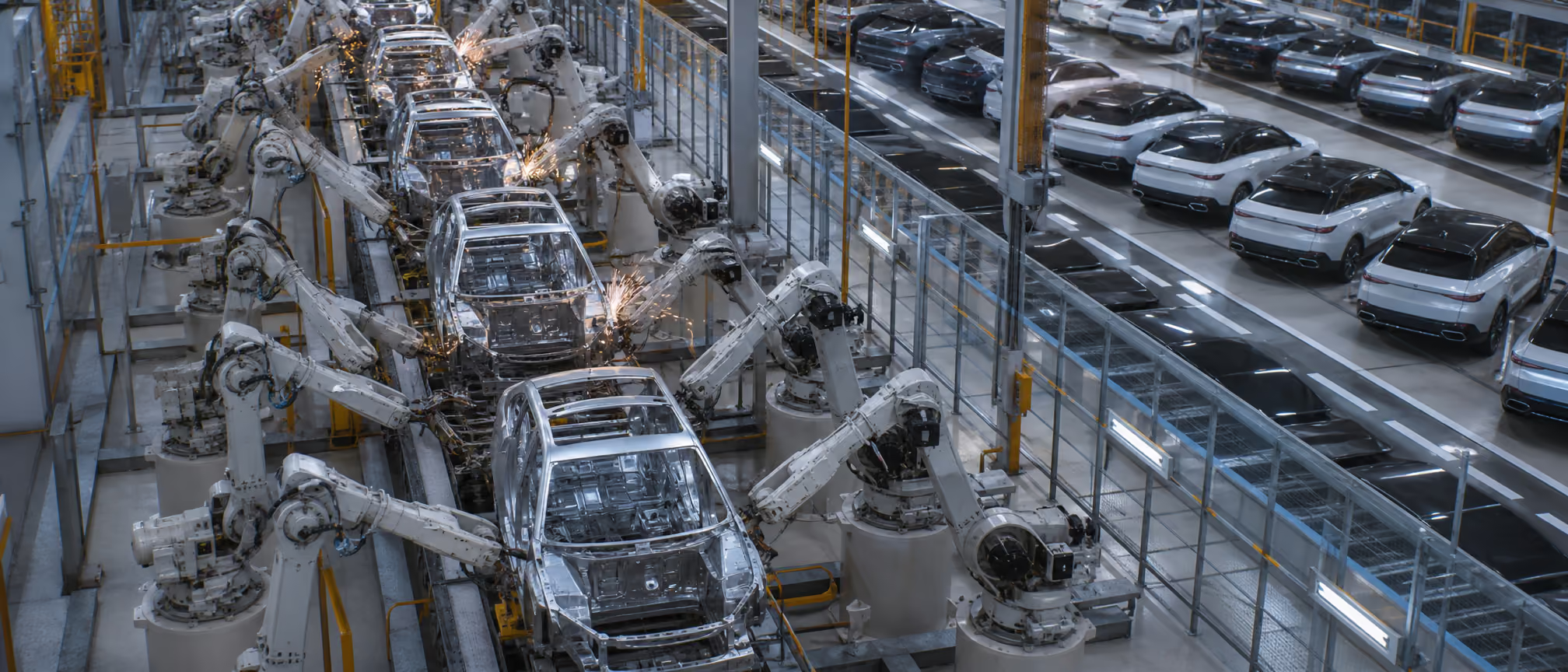
The automotive supply chain is one of the deepest and most tightly synchronised in the world. A single vehicle contains thousands of parts, drawn from a pyramid of suppliers many tiers deep, and assembled just in time, often just in sequence, with almost no buffer. That design delivers remarkable efficiency, and it means a shortage of one small component far down the chain can stop a production line worth millions a day. The semiconductor shortage made the lesson unmistakable: a chip costing a few dollars can idle a factory building cars worth tens of thousands. Managing automotive supply chain risk is, above all, about managing tier-n complexity. Here are the biggest risks and how to handle them.
The biggest automotive supply chain risks
Extreme tier-n depth. With thousands of parts and many supplier tiers, the automotive supply base is vast and mostly invisible below Tier 1. The component that stops the line is often one you have no direct relationship with.
Just-in-time and just-in-sequence fragility. Automotive perfected lean, running with minimal inventory and parts delivered in the exact order of assembly. Efficient in stable conditions, it means even a short interruption upstream halts production almost immediately.
Deep single points of failure. Critical sub-components, semiconductors, wiring harnesses, specialised materials, are often concentrated in a few suppliers or regions. A single event there can affect many models, and many manufacturers, at once.
Geographic concentration. Key inputs cluster in particular regions, so a geopolitical event, natural disaster or trade action can remove a critical part of global supply in one stroke.
Long qualification and model-specific parts. Many components are engineered and qualified for a specific model, so switching sources is slow and expensive, and can't be done in the middle of a shortage.
How to manage automotive supply chain risk
The discipline scales to automotive's depth and tempo.
Map to tier-n. Because the part that stops the line usually sits deep in the chain, mapping beyond Tier 1 to the sub-tier sources of critical components is the foundation. Score by line-down value at risk. Rank exposures by what a stoppage would actually cost per day, so the cheap components that can halt an expensive line get the attention they deserve. Buffer and dual-source the critical few. Hold targeted inventory or qualify second sources for the highest-value single-source components, without abandoning just-in-time where it still works. Model and monitor continuously. Rehearse the disruptions that would stop the line, and watch the signals, supplier health, geopolitics, that precede them. Decide on cause. Understand why a shortage would propagate through the bill of materials and which intervention actually keeps the line running, rather than reacting to the loudest alarm.
Automotive proved, at scale, that supply chain risk lives deep in the network and moves fast once it's triggered. Managing it means seeing and preparing for tier-n complexity before a small part becomes a stopped line. For the underlying approach, see our guide to supply chain risk management, and for the depth automotive demands, sub-tier supply chain visibility.
Questions this piece raises
What are the biggest supply chain risks in the automotive industry?

Why is just-in-time risky for automotive?
What did the semiconductor shortage teach about automotive supply chains?
See Causal AI applied to your supply chain.
A structured, 45-minute session with a senior solutions architect.
Request a Demo
Related insights

MRO Supply Chain Risk in Mining and Oil and Gas
In asset-intensive industries, a missing spare part can idle a multimillion-dollar asset. Why MRO supply chains carry such high-stakes risk, and how to manage it with a value-at-risk mindset.
Government Supply Chain Risk Management: Defensible by Design
Government supply chain risk demands defensible, auditable decisions and sovereign resilience, not just good outcomes. What makes public-sector risk different, and how to manage it.
Pharmaceutical Supply Chain Risk Management
Pharma supply chains carry unique risks: concentrated active ingredients, fragile cold chains and drug shortages, all under strict regulation. The key risks, and how to manage them.
Supply Chain Risk Management for Manufacturing
In manufacturing, a finished product is only as available as its scarcest input. The biggest supply chain risks manufacturers face, deep in the bill of materials, and how to manage them.

