
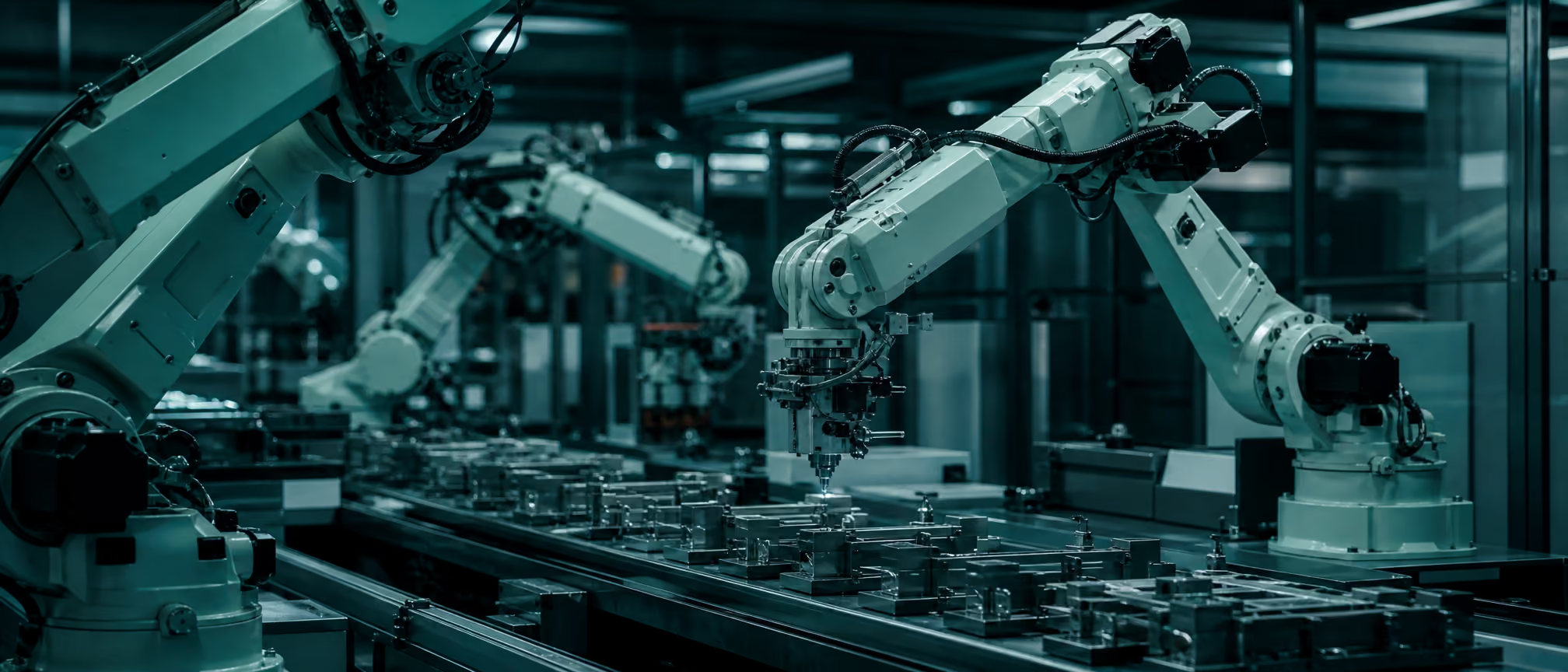
Manufacturing is where supply chain risk bites hardest, because a finished product is only as available as its scarcest input. A car, a machine or a device is assembled from hundreds or thousands of components, each with its own supplier, and each of those suppliers has suppliers of their own. Miss any one critical part and the line stops, however healthy the rest of the network looks. That structure, deep, interdependent and often lean, makes supply chain risk management for manufacturing both harder and more consequential than in most industries. Here are the biggest risks, and how to manage them.
The biggest supply chain risks in manufacturing
Deep, multi-tier bills of materials. A manufacturer's real supply base isn't its direct suppliers; it's the whole tree of components and sub-components beneath them. A shortage three tiers down in a single specialised material can halt production just as surely as a Tier 1 failure, and it's far harder to see coming.
Single-source and specialised components. Many critical parts are made by only one or a few qualified suppliers, sometimes for sound engineering reasons. That creates single points of failure that are expensive and slow to design around once you're in production.
Lean and just-in-time fragility. Decades of lean manufacturing have stripped inventory buffers to the minimum. Efficient in stable times, it leaves almost no slack to absorb a disruption, so a short delay upstream becomes a stoppage downstream.
Hidden concentration. Several of your suppliers may depend on the same sub-tier source, the same material, region or factory, so a single event takes out what looked like diversified supply.
Quality and compliance cascades. A defect or compliance failure in one component can force recalls, requalification and line stoppages far beyond the part itself, especially in regulated manufacturing.
How manufacturers manage it
The response is the same discipline applied with manufacturing's depth in mind.
Map the network to n-th tier. Because manufacturing risk lives deep in the bill of materials, mapping beyond Tier 1 to the sub-tier sources of your critical components isn't optional; it's the foundation. Score by value at risk. Rank exposures by what a stoppage would actually cost, so you focus on the components and suppliers that would halt the line, not just the ones that are easy to see. Design in targeted resilience. Qualify second sources or hold buffer for the highest-value single-source components, without abandoning lean everywhere it still works. Model and monitor. Rehearse the disruptions that would stop production, and monitor the signals, supplier health, geopolitics, that precede them, so you act before the line stops. Decide on cause, defensibly. Understand why a disruption would propagate through your bill of materials and which intervention actually prevents the stoppage, rather than reacting to whatever alarm is loudest.
In manufacturing, supply chain risk management is really about protecting the continuity of the line, and that means seeing and managing risk all the way down the bill of materials, not just at the suppliers you deal with directly. For the full approach, see our guide to supply chain risk management, and for the depth manufacturing demands, sub-tier supply chain visibility.
Questions this piece raises
What are the biggest supply chain risks in manufacturing?

How do manufacturers manage supply chain risk?
Why is sub-tier visibility important in manufacturing?
See Causal AI applied to your supply chain.
A structured, 45-minute session with a senior solutions architect.
Request a Demo
Related insights

MRO Supply Chain Risk in Mining and Oil and Gas
In asset-intensive industries, a missing spare part can idle a multimillion-dollar asset. Why MRO supply chains carry such high-stakes risk, and how to manage it with a value-at-risk mindset.
Government Supply Chain Risk Management: Defensible by Design
Government supply chain risk demands defensible, auditable decisions and sovereign resilience, not just good outcomes. What makes public-sector risk different, and how to manage it.
Automotive Supply Chain Risk: Managing Tier-N Complexity
Automotive supply chains are deep, just-in-time and full of hidden single points of failure. The biggest risks, the chip-shortage lesson, and how to manage tier-n complexity.
Pharmaceutical Supply Chain Risk Management
Pharma supply chains carry unique risks: concentrated active ingredients, fragile cold chains and drug shortages, all under strict regulation. The key risks, and how to manage them.

