
Few supply chains carry higher stakes than pharmaceutical ones, because a disruption doesn't just cost money, it can mean a drug shortage that affects patient care. Pharmaceutical supply chain risk management also operates under some of the strictest regulation anywhere, which makes the network slow to change and every decision one you may have to defend. Add long, globally concentrated sourcing and temperature-sensitive products, and you have an industry where risk is both more likely to bite and more consequential when it does. Here are the biggest risks, and how to manage them.
The biggest risks in the pharmaceutical supply chain
Concentrated active ingredients. The active pharmaceutical ingredients (APIs) behind many medicines are produced by a small number of suppliers, often concentrated in a few countries. That concentration means a single regulatory action, plant closure or geopolitical event can affect the supply of many drugs at once.
Drug shortages and fragile generics. Many essential generic medicines run on thin margins and single sources, so there is little redundancy. A single manufacturing problem can tip a critical drug into shortage, sometimes for months.
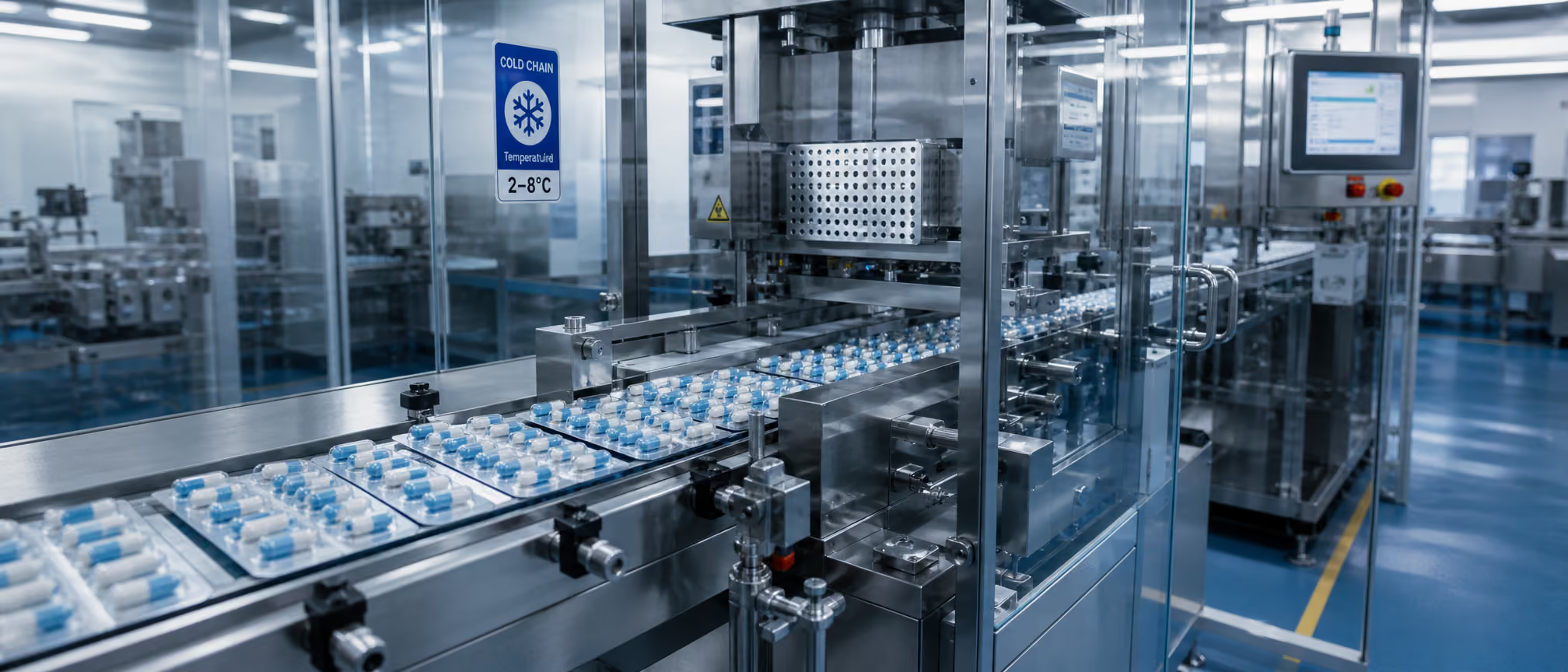
Cold chain integrity. Many products, including vaccines and biologics, must stay within a tight temperature range from manufacture to patient. A break anywhere in that cold chain can spoil an entire shipment, and the failure is not always obvious until it's too late.
Regulatory and GMP constraints. Suppliers and facilities must be qualified under strict good-manufacturing-practice rules, so you cannot simply switch to an alternate source overnight. The very safeguards that protect quality also make the network slow to adapt.
Sub-tier opacity and integrity. Long pharmaceutical supply chains can obscure where ingredients truly originate, raising both concentration risk and, at the extreme, the risk of substandard or falsified inputs entering the chain.
How to manage pharmaceutical supply chain risk
The discipline is the same, sharpened for pharma's stakes and constraints.
Map to the API and sub-tier level. Trace critical medicines down to the API and key raw materials, and to the countries and suppliers that produce them, so concentration is visible before it becomes a shortage. Score by patient impact and value at risk. Rank exposures not only by cost but by clinical criticality, so the medicines whose shortage would hurt patients most get priority. Protect the cold chain. Monitor temperature-sensitive flows end to end, so an excursion is caught while the product can still be saved or replaced. Plan for qualification lead times. Because switching suppliers is slow under GMP, qualify alternate sources in advance for your most critical, most concentrated products, rather than starting when a shortage hits. Model shortages and decide defensibly. Rehearse the disruptions that would cause a shortage, and act on causal reasoning you can defend to a regulator, understanding why a shortage would propagate and which intervention prevents it.
In pharma, supply chain risk management is inseparable from patient safety and regulatory duty, which raises the bar on visibility, preparation and defensibility. For the underlying approach, see our guide to supply chain risk management, and for the depth that surfaces API concentration, sub-tier supply chain visibility.
Questions this piece raises
What are the biggest risks in the pharmaceutical supply chain?

What causes drug shortages?
How do you manage pharmaceutical supply chain risk?
See Causal AI applied to your supply chain.
A structured, 45-minute session with a senior solutions architect.
Request a Demo
Related insights

MRO Supply Chain Risk in Mining and Oil and Gas
In asset-intensive industries, a missing spare part can idle a multimillion-dollar asset. Why MRO supply chains carry such high-stakes risk, and how to manage it with a value-at-risk mindset.
Government Supply Chain Risk Management: Defensible by Design
Government supply chain risk demands defensible, auditable decisions and sovereign resilience, not just good outcomes. What makes public-sector risk different, and how to manage it.
Automotive Supply Chain Risk: Managing Tier-N Complexity
Automotive supply chains are deep, just-in-time and full of hidden single points of failure. The biggest risks, the chip-shortage lesson, and how to manage tier-n complexity.
Supply Chain Risk Management for Manufacturing
In manufacturing, a finished product is only as available as its scarcest input. The biggest supply chain risks manufacturers face, deep in the bill of materials, and how to manage them.

