

If you're evaluating Altana or looking for an alternative to it, the most useful question isn't which tool has the longer feature list. It's which underlying approach fits the decisions you need to make. Altana is one of the most capable supply chain mapping platforms available, and understanding exactly what it does well, and where a different approach may serve you better, is the fastest way to a good decision. Here's a fair look at both.
What Altana does well
Altana describes itself as a value chain management system built on an enormous supply chain knowledge graph, drawing on billions of shipment records to map hundreds of millions of companies and their relationships. That scale is its strength. If your priority is illuminating your extended supplier network, tracing products through multiple tiers, and supporting compliance, sustainability and transparency work across a vast web of relationships, a knowledge graph of that size is a formidable asset. For mapping who is connected to whom, at global scale, it is very good at what it does.
Where a different approach may fit better
The question to ask when considering an alternative is what you need beyond the map. A knowledge graph is, by design, a representation of relationships and correlations: who supplies whom, and what has historically moved together. That is exactly right for visibility and monitoring. It is less suited to a different set of questions that many buyers actually care about:
What will happen if we intervene? A graph can show exposure; it doesn't model the effect of a specific action before you take it. Why is this disruption propagating, and what actually stops it? Understanding mechanism, not just connection, is a different capability. Can we defend this recommendation? For board, audit or regulatory scrutiny, a decision needs its reasoning attached, not just a correlation.
If those questions matter to you, the paradigm, not the feature list, is what to evaluate.
The paradigm question: knowledge graph vs causal reasoning
This is the real fork in the road, and we cover it in depth in our buyer's framework for comparing supply chain risk platforms. In short: a knowledge graph maps and monitors relationships at scale; causal AI models cause and effect, so it can estimate the impact of an intervention, reason about disruptions it hasn't seen before, and show the reasoning behind a recommendation. The two are not the same tool with different branding; they answer different questions. An Altana alternative built on causal reasoning isn't a bigger map, it's a different capability aimed at the decision rather than the diagram.
How to choose
Match the approach to your need. If your priority is the broadest possible map of your extended network for visibility, compliance and transparency, a large knowledge graph is a strong fit. If your priority is deciding what to do about the risks you find, especially under novel disruption and scrutiny, look for a platform that reasons about cause and effect and can defend its recommendations. Many organisations end up valuing both, but knowing which you're actually buying for is what prevents an expensive mismatch.
Choosing between Altana and an alternative comes down to whether you need the best map of relationships or the best reasoning about what to do, and being honest about which. For the full evaluation approach, see our buyer's framework, and for the reasoning paradigm itself, causal AI for supply chains.
Questions this piece raises
What is Altana?

What should you look for in an Altana alternative?
Knowledge graph or causal AI, which is better for supply chain risk?
See Causal AI applied to your supply chain.
A structured, 45-minute session with a senior solutions architect.
Request a Demo
Related insights

Interos Alternative: Causal Intelligence for Resilience
Evaluating an Interos alternative? Interos excels at real-time monitoring on a business-relationship graph. Why causal intelligence adds the reasoning that turns detection into a defensible response.
Comparing Supply Chain Risk Platforms: A Buyer's Framework
Most supply chain risk platforms look alike in a demo. A buyer's framework for comparing them on what matters, and the deeper divide between mapping relationships and reasoning about cause.
Why Correlation-Based AI Fails on Novel Supply Chain Shocks
Correlation-based AI predicts from past patterns, so it breaks on the novel, overlapping disruptions that are now the steady state, not the rare exception. Here's why, and why causal reasoning holds up.
Causal AI vs Generative AI: The Difference That Matters
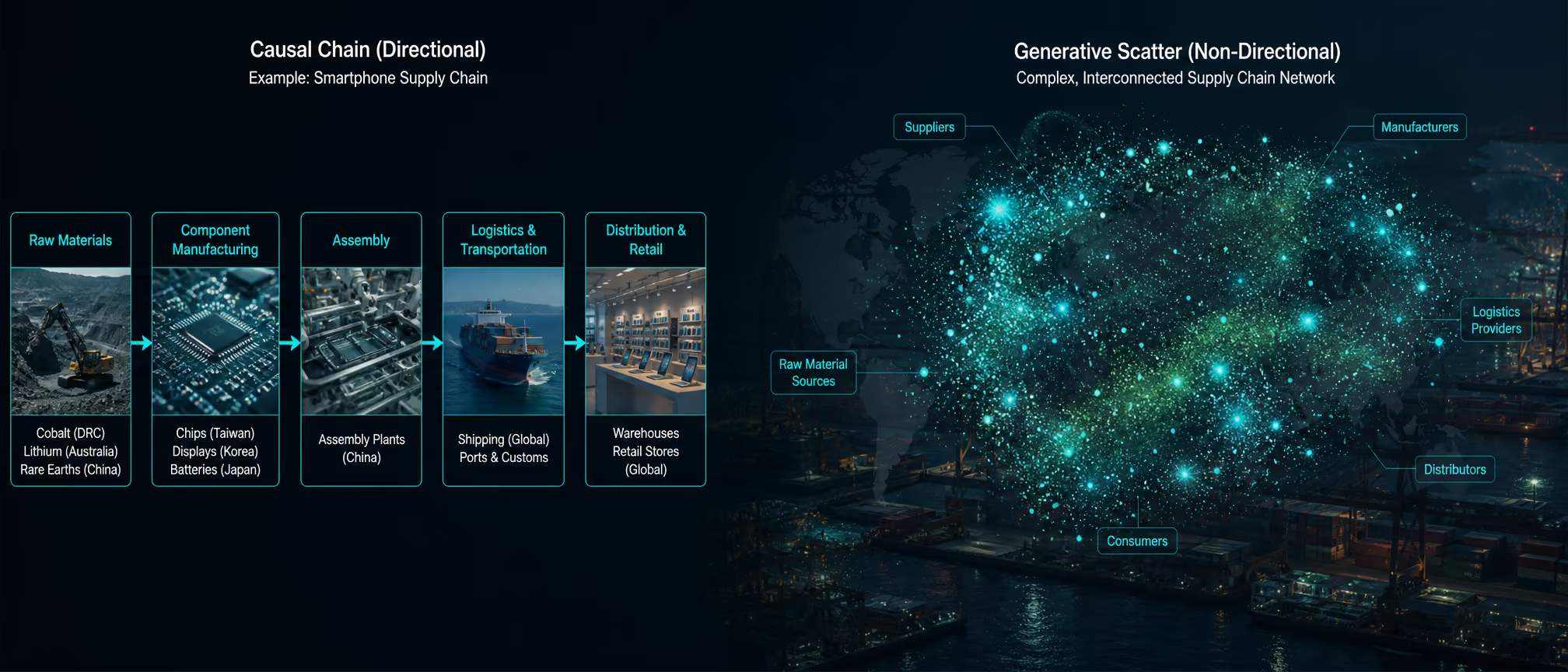
Generative AI creates; causal AI decides. This explains the difference between causal AI and generative AI, why they're complementary rather than competing, and why the distinction matters for real decisions.
What Is Causal AI? A Plain-English Guide for Business Leaders
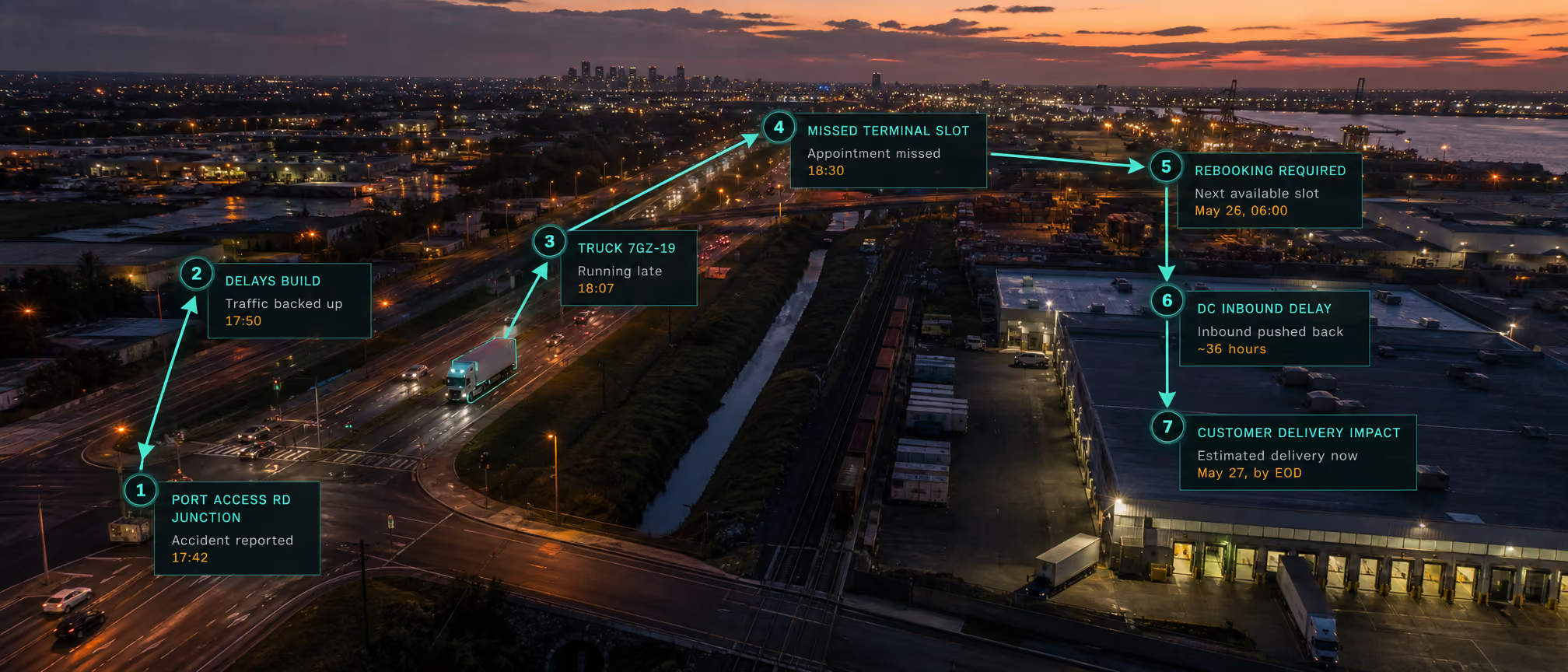
Causal AI works out cause and effect, not just correlation. This plain-English guide explains what causal AI is, how it works, why it matters for decisions, and where it's used.

