

Correlation-based AI fails on novel supply chain shocks for one fundamental reason: it can only recognise what it has seen before. It learns the patterns in historical data and assumes they'll keep holding. The problem is that novel disruption is no longer the rare exception, it's the steady state. Tariffs shift, weather turns, suppliers wobble and demand jumps, and these events overlap and interact in combinations that have never occurred in exactly that form before. A pattern-matching model is quietly falling behind this constant stream of the unprecedented, not just failing during the occasional headline crisis. This is the core reason correlation isn't enough for supply chain decisions, and why the gap matters more than it sounds.
How correlation-based AI works, and where it's fine
Most AI used in supply chains today is correlation-based. It studies history, learns that certain signals tend to move together, and uses those relationships to predict. When conditions resemble the past, this works well: demand forecasting in a stable market, lead-time prediction under normal conditions, routine anomaly detection. The trouble isn't that correlation is useless. It's that it quietly assumes tomorrow will look like yesterday, and in a modern supply chain, tomorrow rarely does. The genuinely stable stretches where correlation shines are shrinking, while the messy, overlapping, faintly unprecedented conditions where it struggles are becoming the everyday.
Why novel shocks break it
No precedent to match. A pattern-matching model has nothing to draw on when an event has never occurred in its training data. Faced with a genuinely new disruption, it doesn't reason, it guesses, because there's no similar past case to lean on.
Correlations that stop holding. The relationships a model learned in normal times can reverse or vanish under a shock. A supplier that was reliable, a route that was stable, a demand signal that was steady, all can behave completely differently under pressure, and the model keeps applying rules that no longer apply.
No answer to "what should we do." Even when a correlation-based model flags that risk is rising, it can't tell you which intervention would reduce it, because it doesn't model cause and effect. It describes the symptom without prescribing a remedy, leaving the hardest decision entirely to you.
No explanation you can defend. When the model can't say why it reached a conclusion, you can't justify acting on it, which in supply chain decisions with real financial and regulatory weight is often a dealbreaker.
Why supply chains make this especially dangerous
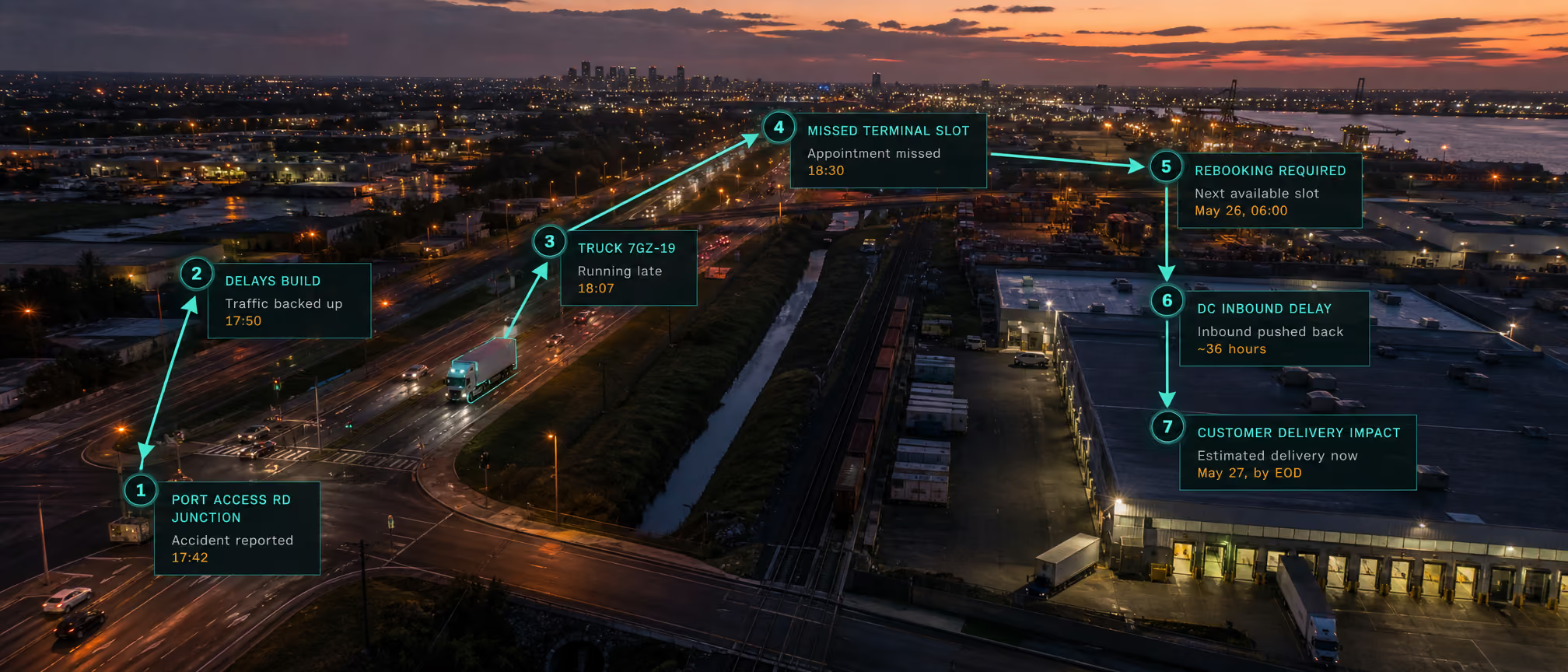
Two features of supply chains make this failure mode particularly costly. First, disruption is continuous and overlapping: at any given moment several pressures are interacting, and their specific combination is usually one the data has never seen, so correlation is on the back foot constantly, not just occasionally. Second, disruptions propagate: a shock in one node cascades through the network in ways that depend on its structure, not just on historical co-movement. Predicting that cascade requires understanding how the network actually works, not just which signals moved together last time.
What causal reasoning does instead
Causal reasoning starts from a different place: a model of how things cause other things, rather than a catalogue of what has co-occurred. Because it reasons about mechanisms, it can extend to situations it hasn't seen, estimate what a given intervention would actually do, and show the chain of cause and effect behind its conclusion. That's why it holds up across the constant flow of novel, overlapping conditions where correlation breaks, and why its recommendations are defensible. It isn't a break-glass tool you reach for once a crisis has already hit; it's an everyday decision layer that keeps reasoning as conditions shift, which is exactly what a network under continuous change needs. For the underlying idea, see our guides to what causal AI is and causal AI versus generative AI.
The pattern-matching that works so well in calm conditions is the very thing that fails as conditions keep shifting, which they now do constantly. That gap between correlation and causation is small in theory and, in a supply chain that never quite sits still, decisive in practice. For how causal reasoning applies across supply chain risk, see our guide to causal AI for supply chains.
Questions this piece raises
Why does correlation-based AI fail on new, unseen disruptions?

What is the difference between correlation and causation in supply chain AI?
Why is explainable AI important for supply chain decisions?
See Causal AI applied to your supply chain.
A structured, 45-minute session with a senior solutions architect.
Request a Demo
Related insights

Interos Alternative: Causal Intelligence for Resilience
Evaluating an Interos alternative? Interos excels at real-time monitoring on a business-relationship graph. Why causal intelligence adds the reasoning that turns detection into a defensible response.
Altana Alternative: A Causal AI Approach to Supply Chain Risk
Evaluating an alternative to Altana? Altana is a powerful supply chain knowledge graph. Here's a fair look at what it does well, and where a causal reasoning approach fits the decision better.
Comparing Supply Chain Risk Platforms: A Buyer's Framework
Most supply chain risk platforms look alike in a demo. A buyer's framework for comparing them on what matters, and the deeper divide between mapping relationships and reasoning about cause.
Causal AI vs Generative AI: The Difference That Matters
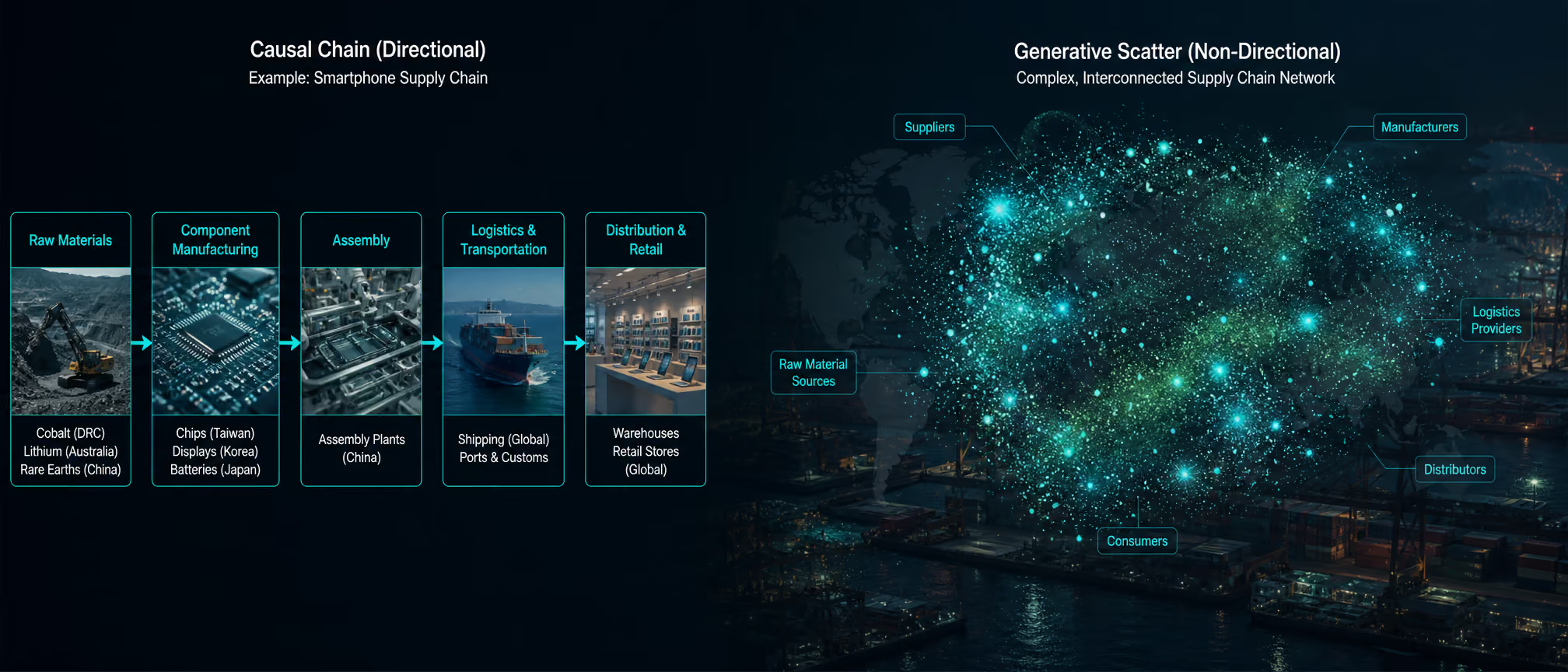
Generative AI creates; causal AI decides. This explains the difference between causal AI and generative AI, why they're complementary rather than competing, and why the distinction matters for real decisions.
What Is Causal AI? A Plain-English Guide for Business Leaders
Causal AI works out cause and effect, not just correlation. This plain-English guide explains what causal AI is, how it works, why it matters for decisions, and where it's used.

