
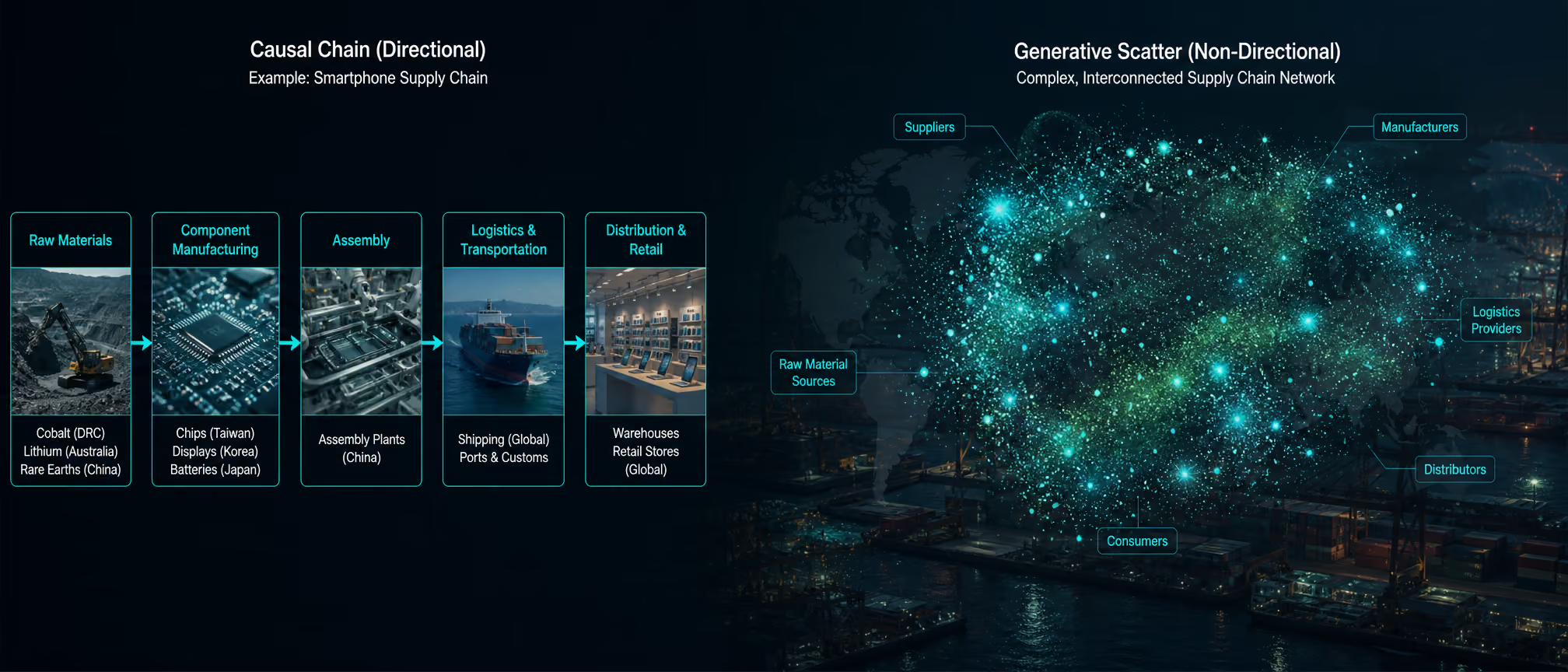
The simplest way to put it: generative AI creates, and causal AI decides. Generative AI, the technology behind chatbots and image tools, produces new content by predicting the most likely next word, pixel or token based on patterns in its training data. Causal AI works out cause and effect, so it can tell you what will happen if you take an action, and why. The two are often lumped together as 'AI,' but they answer completely different questions, and confusing them leads to using the wrong tool for the job. Here's the difference, and why it matters.
What generative AI does
Generative AI is a pattern engine. Trained on vast amounts of text, images or code, it learns the statistical patterns in that data and uses them to generate plausible new output: an email, a summary, an image, a line of code. It's genuinely transformative for anything involving language and content, drafting, summarising, translating, brainstorming. But its output is a prediction of what's plausible, not a statement of what's true or what will happen if you act. It knows what tends to follow what; it doesn't know why.
What causal AI does
Causal AI is a reasoning engine for cause and effect. Instead of generating content, it models how the parts of a system influence each other, so it can answer the questions decisions turn on: if we change this, what happens; what would have happened if we'd done something different; what is actually driving this outcome. Where generative AI produces something plausible, causal AI estimates a consequence you can act on. For a fuller primer, see our guide to what causal AI is.
The difference that matters
Put simply, generative AI predicts patterns; causal AI reasons about cause and effect. That distinction has three practical consequences. First, decisions: generative AI can describe options eloquently, but it can't tell you which action will actually produce the outcome you want; causal AI can. Second, novel situations: generative AI is only as good as the patterns it has seen, so it struggles when conditions are genuinely new; causal AI reasons from cause, so it holds up on situations without precedent. Third, defensibility: a generative model can't reliably explain why its answer is right, while a causal model can show the chain of cause and effect behind its recommendation, which matters when a decision has to stand up to a board or a regulator.
They're complementary, not rivals
This isn't a contest with a winner. The two are good at different things, and increasingly they work together: generative AI as the natural-language interface that makes complex analysis easy to interrogate, causal AI as the reasoning underneath that makes the answers sound. Ask a question in plain language, and get an answer grounded in cause and effect that you can act on and defend. The mistake isn't choosing one; it's using generative AI for a job that actually needs causal reasoning.
Why it matters for high-stakes decisions
The difference is sharpest wherever a wrong decision is expensive or has to be justified: supply chains, finance, healthcare, government and defence. In those settings, a plausible-sounding answer isn't enough. You need to know that acting on it will produce the intended effect, and you need to be able to explain why. That's precisely what generative AI can't guarantee and what causal AI is built for.
Generative AI is reshaping how we create; causal AI is reshaping how we decide. For how causal reasoning applies to supply chains, see our guide to causal AI for supply chains.
Questions this piece raises
How is causal AI different from generative AI?

Can causal AI and generative AI be used together?
Is generative AI or causal AI better for decision-making?
See Causal AI applied to your supply chain.
A structured, 45-minute session with a senior solutions architect.
Request a Demo
Related insights

Interos Alternative: Causal Intelligence for Resilience
Evaluating an Interos alternative? Interos excels at real-time monitoring on a business-relationship graph. Why causal intelligence adds the reasoning that turns detection into a defensible response.
Altana Alternative: A Causal AI Approach to Supply Chain Risk
Evaluating an alternative to Altana? Altana is a powerful supply chain knowledge graph. Here's a fair look at what it does well, and where a causal reasoning approach fits the decision better.
Comparing Supply Chain Risk Platforms: A Buyer's Framework
Most supply chain risk platforms look alike in a demo. A buyer's framework for comparing them on what matters, and the deeper divide between mapping relationships and reasoning about cause.
Why Correlation-Based AI Fails on Novel Supply Chain Shocks
Correlation-based AI predicts from past patterns, so it breaks on the novel, overlapping disruptions that are now the steady state, not the rare exception. Here's why, and why causal reasoning holds up.

What Is Causal AI? A Plain-English Guide for Business Leaders
Causal AI works out cause and effect, not just correlation. This plain-English guide explains what causal AI is, how it works, why it matters for decisions, and where it's used.

