
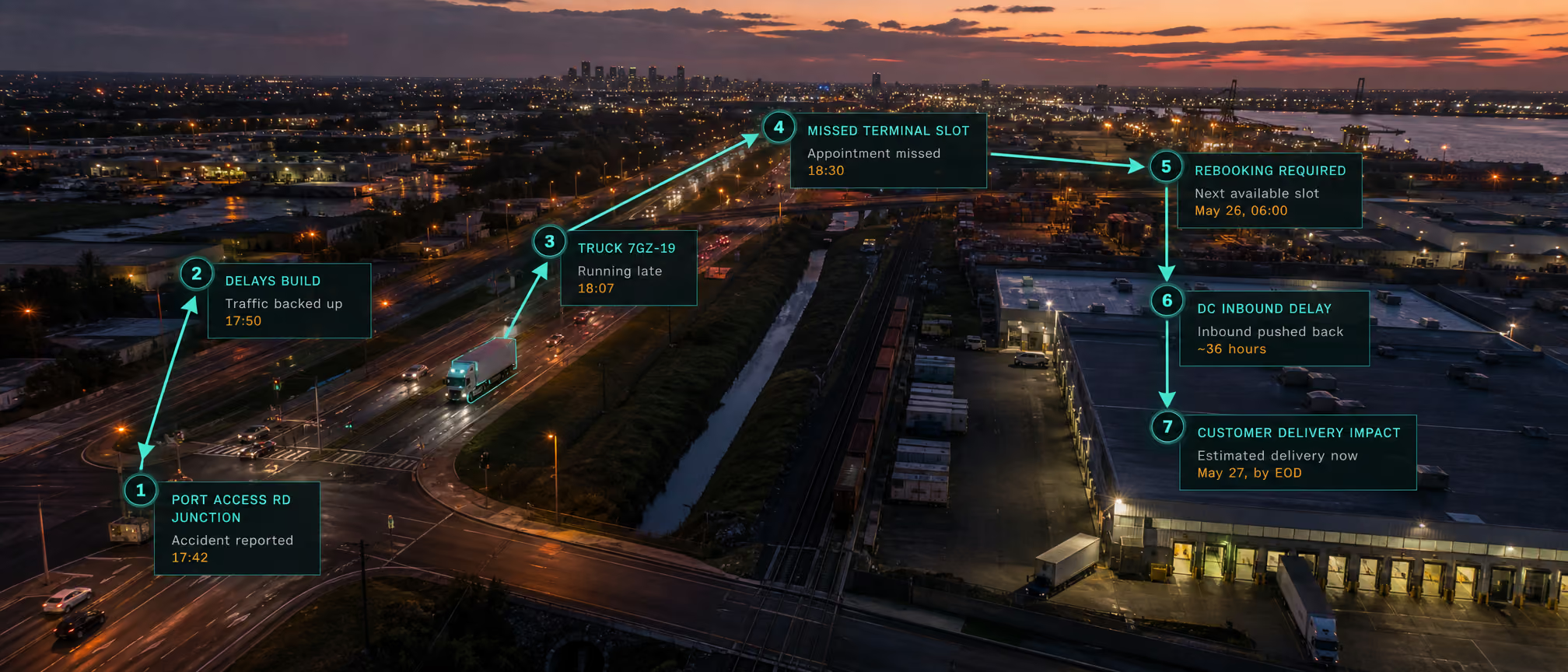
Causal AI is artificial intelligence that works out cause and effect: it doesn't just spot that two things tend to happen together, it works out which one causes the other, and what would happen if you changed it. That distinction sounds academic, but it's the difference between an AI that can tell you 'sales and ad spend move together' and one that can tell you 'spending more on ads will actually cause sales to rise, by roughly this much.' For anyone making decisions, that's the difference that matters. This is a plain-English guide to what causal AI is, how it works, and why business leaders are paying attention to it.
Correlation is not causation, and most AI only does correlation
Most of the AI you've heard about, including the models behind today's predictive tools, works by finding patterns in historical data. It learns that when one thing happens, another usually follows, and uses that to predict. This is powerful, but it has a blind spot: correlation isn't causation. Ice cream sales and drowning deaths rise together, yet ice cream doesn't cause drowning; hot weather drives both. A correlation-based model can't tell the difference, which means it can't reliably tell you what will happen if you intervene and change something. Causal AI is built to close exactly that gap.
How causal AI works, in plain terms
Causal AI builds a model of how things actually influence each other, a map of causes and effects, rather than just a list of things that move together. With that model it can do three things correlation-based tools can't. It can estimate the effect of an action before you take it: if we do this, what happens to that. It can answer counterfactuals: what would have happened if we'd done something different. And it can separate the real driver of an outcome from the things that merely accompany it. You don't need the mathematics to use it. The point is that it reasons about causes the way a good analyst would, at a scale and speed a person can't match.
Why business leaders care
Every decision is really a bet about cause and effect: do this, and that will improve. Correlation-based AI describes the world; causal AI helps you change it. That makes it directly useful for the things leaders actually do: choosing between interventions, forecasting the impact of a decision, and understanding why an outcome happened. It's also more defensible. Because a causal model can show its reasoning, you can explain and stand behind a decision it informed, rather than pointing at a number from a black box. In regulated and high-stakes settings, that explainability is often the deciding factor.
Causal AI examples
A few plain examples make it concrete. In pricing, causal AI can estimate how much a price change will actually shift demand, rather than just noting that price and demand are related. In healthcare research, it can help separate the treatments that cause better outcomes from the ones that merely correlate with already-healthier patients. In supply chains, it can work out why a disruption is spreading and which intervention would actually contain it, not just which signals happen to be moving. The common thread is a question correlation can't answer: not 'what tends to go with what,' but 'what will happen if we act.'
How it relates to other AI
Causal AI isn't a replacement for everything else; it answers a different kind of question. Predictive and generative models are excellent at recognising patterns and producing content. Causal AI is about reasoning through cause and effect to support decisions. For a closer look at that contrast, see our guide to causal AI versus generative AI.
In short, causal AI is the step from describing the world to changing it deliberately. For how that plays out in supply chains specifically, see our guide to causal AI for supply chains.
Questions this piece raises
What is causal AI in simple terms?

What is the difference between causal AI and traditional machine learning?
What is causal AI used for?
See Causal AI applied to your supply chain.
A structured, 45-minute session with a senior solutions architect.
Request a Demo
Related insights

Interos Alternative: Causal Intelligence for Resilience
Evaluating an Interos alternative? Interos excels at real-time monitoring on a business-relationship graph. Why causal intelligence adds the reasoning that turns detection into a defensible response.
Altana Alternative: A Causal AI Approach to Supply Chain Risk
Evaluating an alternative to Altana? Altana is a powerful supply chain knowledge graph. Here's a fair look at what it does well, and where a causal reasoning approach fits the decision better.
Comparing Supply Chain Risk Platforms: A Buyer's Framework
Most supply chain risk platforms look alike in a demo. A buyer's framework for comparing them on what matters, and the deeper divide between mapping relationships and reasoning about cause.
Why Correlation-Based AI Fails on Novel Supply Chain Shocks
Correlation-based AI predicts from past patterns, so it breaks on the novel, overlapping disruptions that are now the steady state, not the rare exception. Here's why, and why causal reasoning holds up.
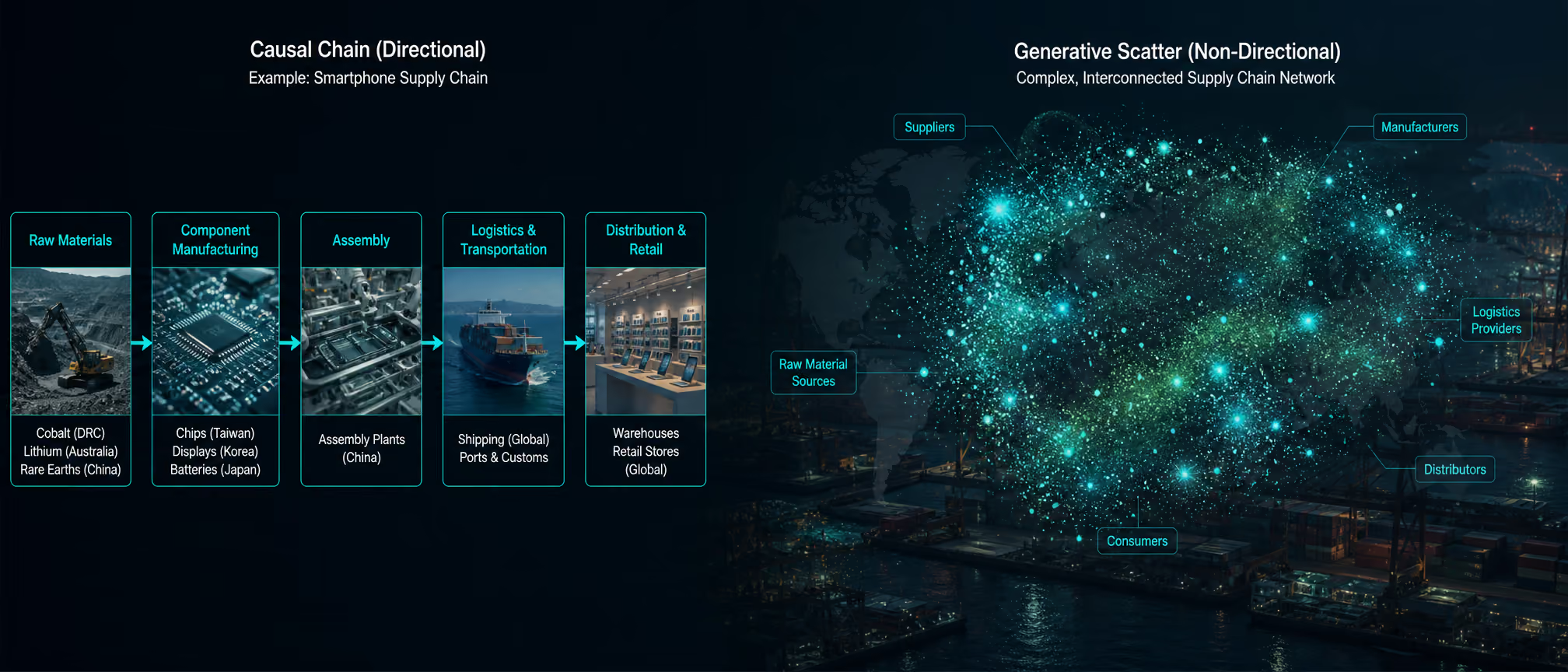
Causal AI vs Generative AI: The Difference That Matters
Generative AI creates; causal AI decides. This explains the difference between causal AI and generative AI, why they're complementary rather than competing, and why the distinction matters for real decisions.

