

If you're evaluating Interos or weighing up an alternative, the decision comes down to the approach underneath, not the length of the feature list. Interos is a strong real-time supply chain risk monitoring platform, and the useful question is what you need on top of monitoring, and where a causal approach fits. Here's a fair look at both.
What Interos does well
Interos is built on what it describes as one of the world's largest business-relationship knowledge graphs, mapping hundreds of millions of companies and billions of relationships, and continuously monitoring them across multiple risk domains, financial, cyber, geopolitical, restrictions, ESG and operational, expressed through a single risk score. Its strength is breadth and continuity: watching a vast network in real time and flagging risk as it emerges across many categories at once. If your priority is continuous, wide-angle monitoring and scoring of your supplier network, that is a serious capability.
Where a different approach fits better
Real-time monitoring answers one question extremely well: what is changing, and where is risk rising. But detection is not the same as decision. Monitoring and scoring, however fast, still rest on relationships and correlations, so they surface that risk is elevated without reliably telling you what to do about it. The questions that remain are the ones resilience actually turns on:
Which alert actually matters? Continuous monitoring can generate more signals than anyone can act on. Prioritising by the value at risk behind each, and by whether a change truly raises your exposure, is a different capability from generating the alert. What intervention actually helps, and why? Knowing risk is rising isn't knowing which move reduces it. Can we defend the response? A score is not a rationale a board or regulator can scrutinise.
These are questions of cause, not correlation.
The paradigm: monitoring relationships vs reasoning about cause
We cover this fork in full in our buyer's framework. In short, a knowledge graph with real-time monitoring maps and watches relationships at scale; causal AI adds a layer that reasons about cause and effect, so it can weigh which risks matter, estimate what an intervention would do, hold up on disruptions with no precedent, and explain its reasoning. For resilience, which is ultimately about absorbing and recovering from shocks, that reasoning layer is what turns detection into a defensible response. That's the sense in which causal intelligence complements, and goes beyond, monitoring alone.
How to choose
Match the approach to your need. If your priority is broad, continuous monitoring and scoring of your network across many risk domains, an Interos-style platform is strong. If your priority is deciding and defending what to do about what monitoring surfaces, especially under novel disruption, look for a platform that reasons about cause and effect and prioritises by value at risk rather than adding to the alert pile. Detection and reasoning are complementary; the mistake is assuming monitoring alone will tell you what to do.
Interos and an alternative differ most in whether they stop at detecting risk or go on to reason about it. For resilience, both matter, but the reasoning is what lets you act and defend the action. See our buyer's framework for the full comparison, causal AI for supply chains for the approach, and managing supply chain disruption for turning detection into response.
Questions this piece raises
What is Interos?

What should you look for in an Interos alternative?
Is real-time supply chain risk monitoring enough?
See Causal AI applied to your supply chain.
A structured, 45-minute session with a senior solutions architect.
Request a Demo
Related insights

Altana Alternative: A Causal AI Approach to Supply Chain Risk
Evaluating an alternative to Altana? Altana is a powerful supply chain knowledge graph. Here's a fair look at what it does well, and where a causal reasoning approach fits the decision better.
Comparing Supply Chain Risk Platforms: A Buyer's Framework
Most supply chain risk platforms look alike in a demo. A buyer's framework for comparing them on what matters, and the deeper divide between mapping relationships and reasoning about cause.
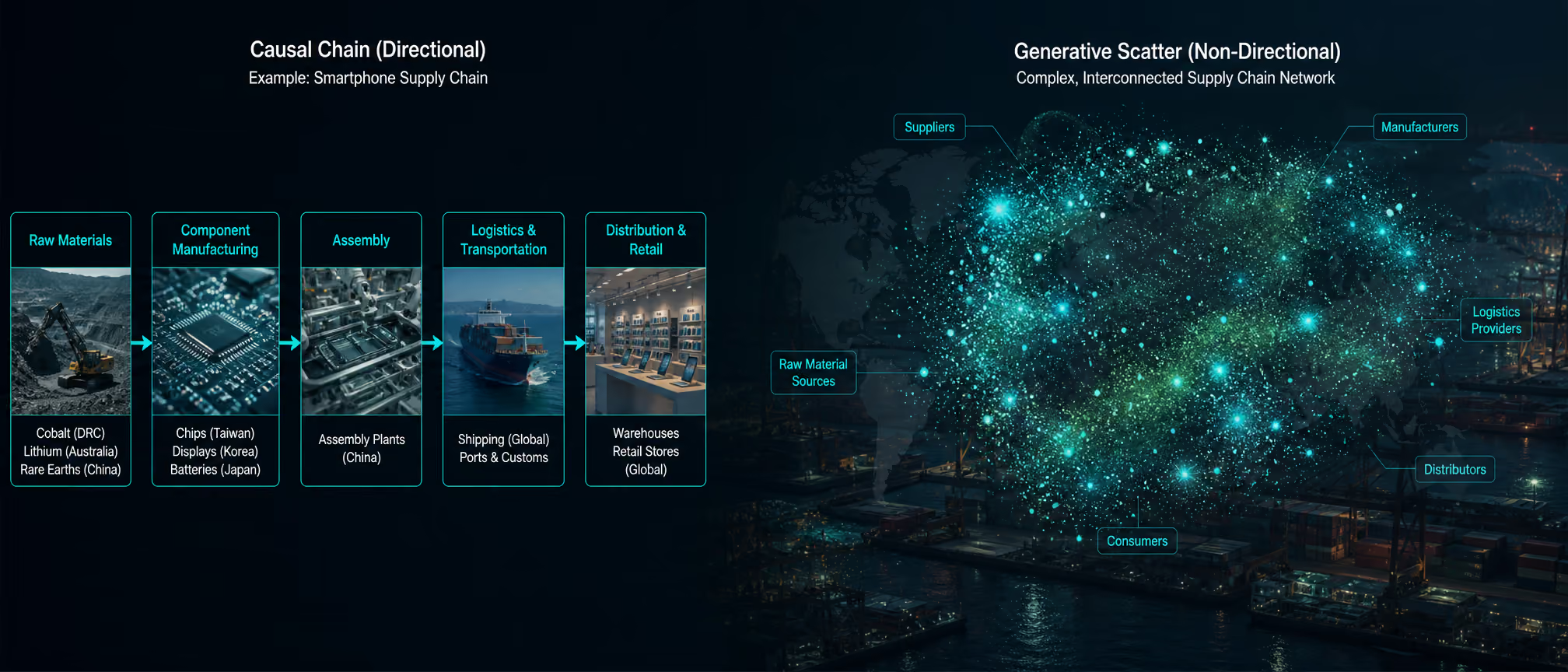
Causal AI vs Generative AI: The Difference That Matters
Generative AI creates; causal AI decides. This explains the difference between causal AI and generative AI, why they're complementary rather than competing, and why the distinction matters for real decisions.
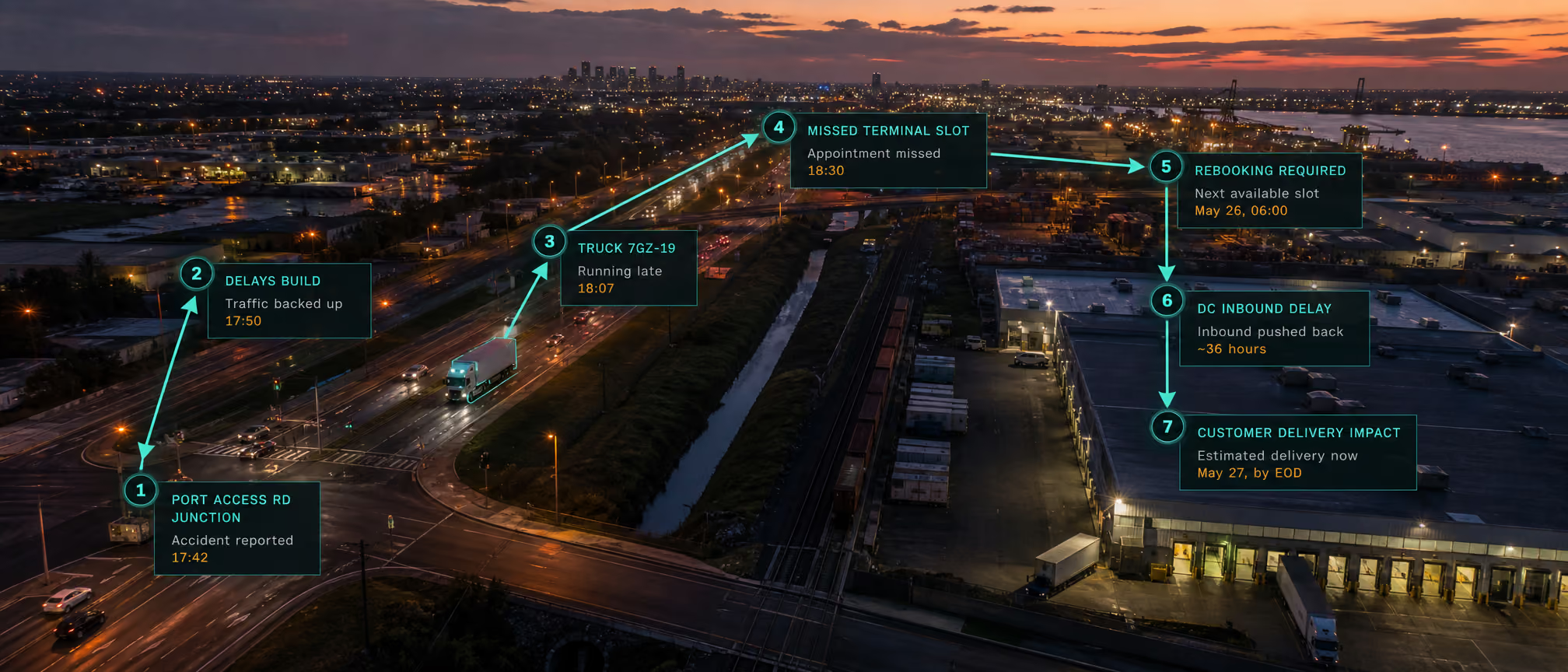
What Is Causal AI? A Plain-English Guide for Business Leaders
Causal AI works out cause and effect, not just correlation. This plain-English guide explains what causal AI is, how it works, why it matters for decisions, and where it's used.

