
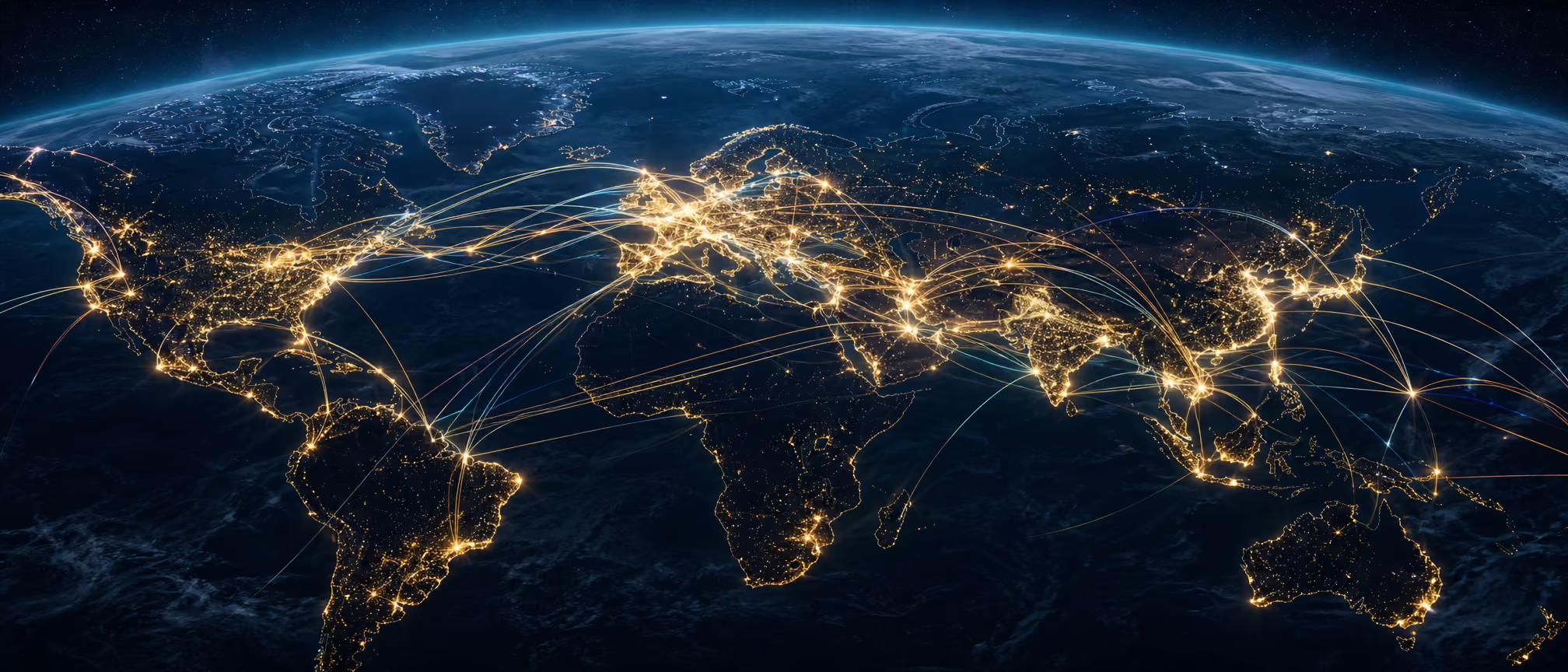
Geopolitical events affect supply chain risk by reshaping the conditions your network depends on: the tariffs on your inputs, the sanctions on a supplier's owner, the shipping lane a conflict suddenly closes, the export controls on a critical component. Geopolitical supply chain risk is the exposure your network carries to these political and international shifts, and it has moved from an occasional concern to a constant, overlapping feature of doing business, and not only for the companies that knowingly trade across borders. This piece covers how geopolitical events reach your supply chain, even when you think you have no global footprint, why they're hard to manage, and how to model the next shock before it lands.
Geopolitical risk is now the steady state
There was a time when geopolitical disruption felt episodic: a crisis every few years. That's no longer the world supply chains operate in. Trade policy shifts, tariffs come and go, sanctions expand, regions destabilise, and these pressures now overlap and interact continuously. Any given quarter carries several live geopolitical exposures at once, in combinations that are usually without precedent. Treating geopolitics as a rare shock to react to, rather than a constant condition to design for, is the first mistake.
You're exposed even if you don't trade internationally
It's easy to assume geopolitical risk is someone else's problem, a concern for importers and multinationals. It isn't. Even a wholly domestic business depends on suppliers who depend on global inputs. Your Tier 1 supplier might be down the road, but the components, materials, energy or software behind what they sell you can cross several borders before they reach you. So a tariff, a sanction or a conflict on the other side of the world can arrive at your door through a supplier you always thought of as local. This indirect exposure is still exposure, and because it hides below Tier 1, it is usually larger, and far less understood, than the direct kind. The businesses most at risk are often the ones convinced they have nothing to worry about.
How geopolitical events reach your supply chain
Geopolitical risk arrives through several channels.
Trade and tariffs: changes in tariffs or trade agreements alter the cost and viability of sourcing from a given country overnight. Sanctions and export controls: a supplier, an owner, or a component can move from permitted to prohibited, sometimes with little warning. Conflict and instability: war or unrest can close logistics routes, shut facilities, or cut off entire regions. Regulatory divergence: differing and shifting rules across jurisdictions add compliance risk and complexity.
Crucially, these rarely hit only where you're looking. A geopolitical event in one region cascades through the tiers of your network, and the exposure often sits in a sub-tier supplier you didn't know was there.
Why it's hard to manage with traditional tools
Geopolitical shocks are exactly the kind of novel, overlapping disruption that correlation-based tools handle worst, because a genuinely new event has no historical pattern to match. Add two supply chain realities, that geographic exposure is often concentrated in ways you can't see below Tier 1, and that a single event can hit several suppliers at once, and it's clear why geopolitical risk so often arrives as a surprise. You can't manage exposure you haven't mapped, to events your tools can't reason about.
How to model the next shock
You can't predict the timing of geopolitical events, but you can map your exposure and rehearse your response.
Map geographic exposure, including sub-tier. Know which of your suppliers, sub-suppliers, routes and inputs sit in which countries and regions, so a headline instantly translates into your specific exposure. Model the scenarios that matter. Run the shocks worth rehearsing, a tariff, a sanction, a closed lane, and see how each would propagate through your network and what it would cost. Quantify the value at risk. Rank exposures by what a given event would actually cost you, so you prepare where it counts. Decide responses in advance. Pre-qualify alternate sources or routes for your highest-exposure dependencies, so a shock triggers a plan rather than a scramble.
Done well, this turns geopolitics from something that happens to you into something you've already planned for.
Geopolitical supply chain risk isn't going back in its box; the task is to make it visible, model it, and rehearse the response. For the discipline that underpins that, see our guide to supply chain scenario planning, and for seeing the geographic exposure hidden below Tier 1, sub-tier supply chain visibility.
Questions this piece raises
How do geopolitical events affect supply chain risk?

What is geopolitical supply chain risk?
How do you manage geopolitical supply chain risk?
See Causal AI applied to your supply chain.
A structured, 45-minute session with a senior solutions architect.
Request a Demo
Related insights

How to Model a Supply Chain Disruption Before It Happens
You model a disruption before it happens by simulating it against a model of your network, then testing the response, where mistakes are free. A practical, step-by-step guide.
Supply Chain Visibility Software: What to Look For in 2026
Not all supply chain visibility is equal. A practical guide to choosing supply chain visibility software in 2026: the capabilities that actually matter, from sub-tier depth to turning what you see into decisions.
How to Build a Supply Chain Risk Management Framework
A supply chain risk management framework is what turns scattered risk activity into a repeatable capability. This is how to build one in six parts: ownership, risk tolerance, a standard process, a data foundation, decision-making, and continuous improvement.
Sub-Tier Supply Chain Visibility: Seeing Beyond Tier 1
Most disruption starts in the suppliers you can't see. This is what sub-tier supply chain visibility means, why seeing beyond Tier 1 is so hard, and a practical way to map the Tier 2 and Tier 3 dependencies that actually threaten you.
Supply Chain Risk Assessment: A Step-by-Step Framework
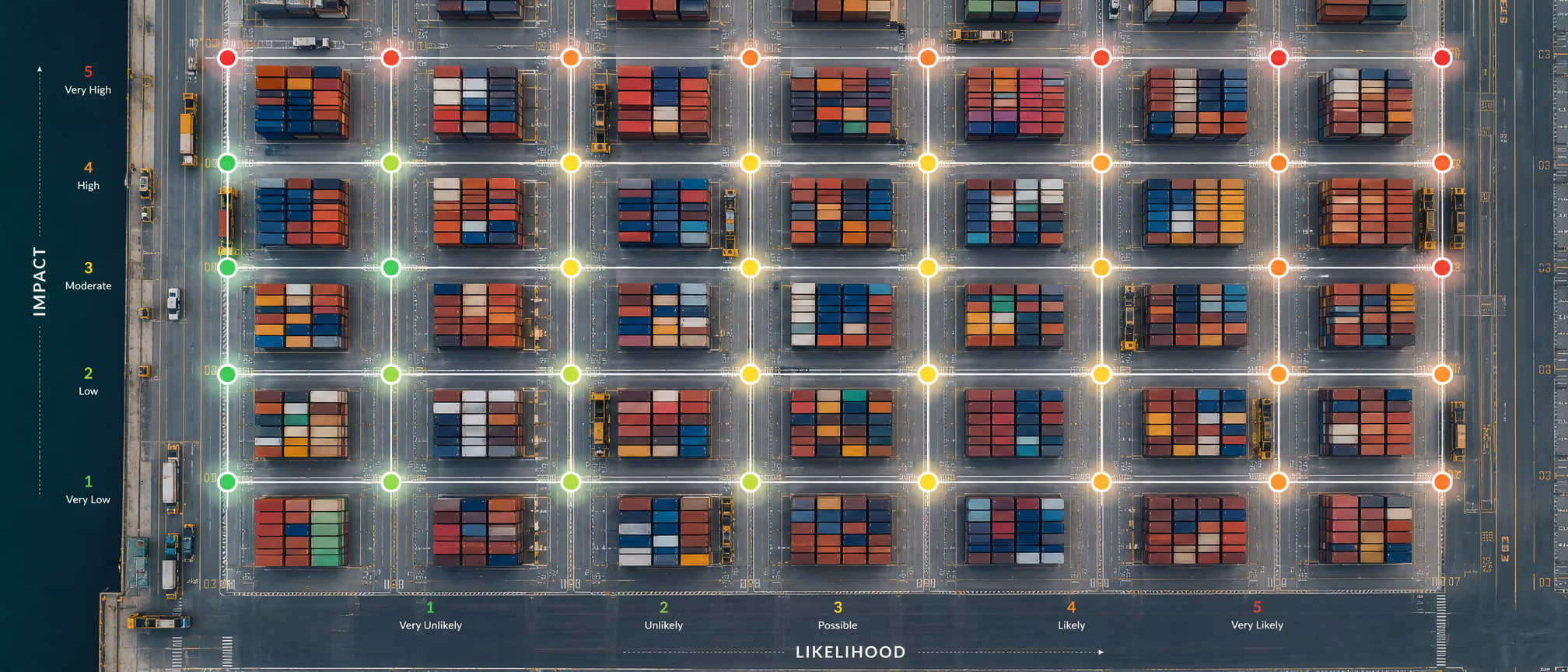
A supply chain risk assessment only drives decisions if it's built on a repeatable framework. This is the six-step method: map your network, identify and score risks, build a risk matrix, assign mitigation, and keep it current.
The 4 Types of Supply Chain Risk (and How to Assess Each)
Not all supply chain risk behaves the same way. This guide breaks risk into its four core types, supply, demand, operational and external, and shows you how to assess each one so you can see where your network is genuinely exposed.

